Description:
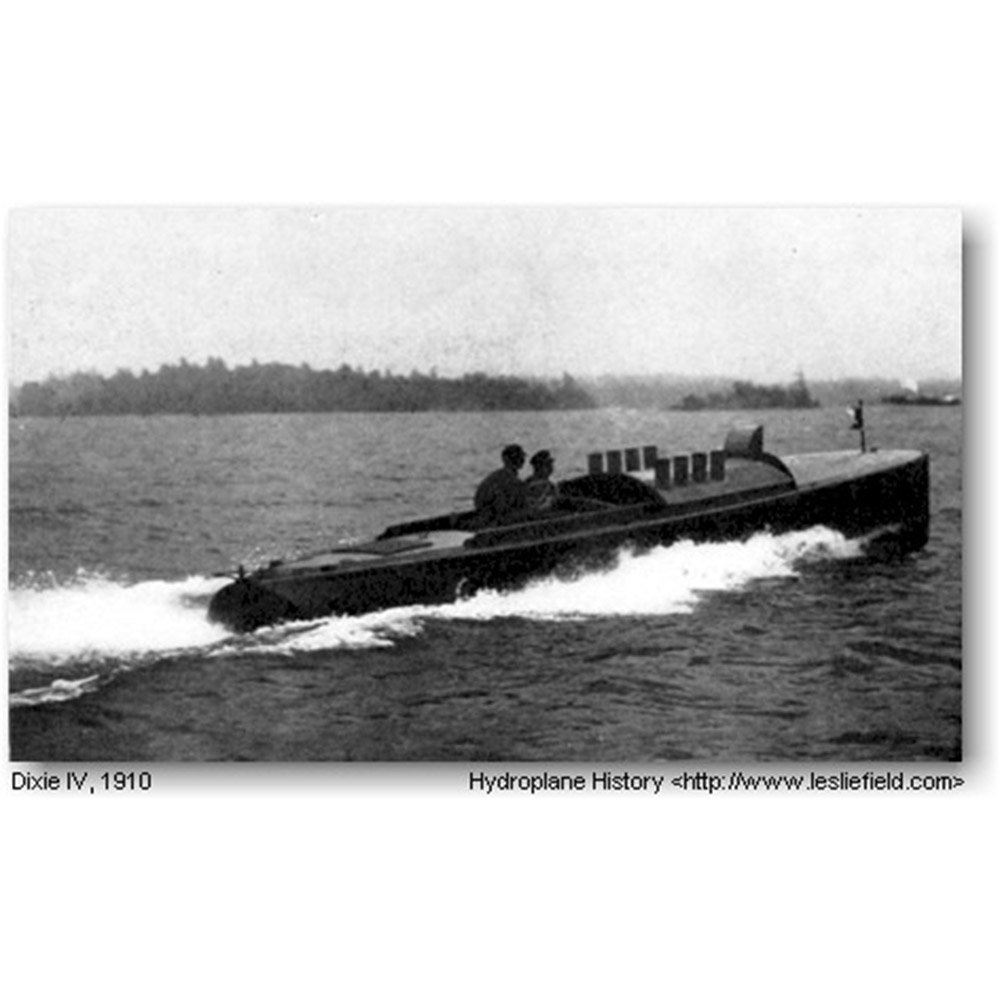
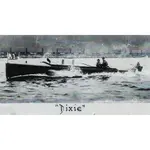
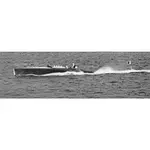
Dixie is an early American racing launch, instantly recognizable by her long, low silhouette and uncompromisingly straight sheer line. The historic photograph shows a narrow, performance-driven hull with minimal freeboard, a plumb bow, and extended aft deck-hallmarks of early 20th-century speed craft.
Her configuration suggests a forward engine arrangement with twin exhaust stacks rising through the foredeck, while the cockpit is positioned aft for balance at speed. The extremely fine entry and slender beam indicate a hull designed primarily for straight-line performance and competitive racing rather than leisure cruising.
Dimensions:
- Length: approx. 40ft (12.2 m)
- Engine: 8-cylinder V-type, 220 HP
- Propeller diameter: 26.5 inches (67cm)
- Hull weight: 1130lbs
Dixie's proportions reflect the engineering mindset of the time: maximize speed through length, reduce drag through narrow beam, and maintain structural rigidity through strong longitudinal framing.
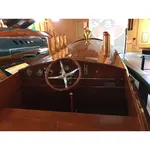
Our workshop faithfully recreates this design using premium Western Red Cedar, Mahogany, and Teak, reinforced with U.S.-made Hexcel fiberglass and protected by System Three marine spar varnish. Each boat is built entirely by hand through the traditional plank-on-frame method, requiring approximately 4-5 months of detailed craftsmanship. Clients may customize wood selection, deck finish, cockpit layout, engine configuration, and interior detailing while preserving the classic geometry of the original design.
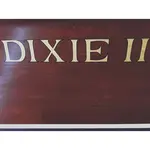
DIXIE II is the name of a historic racing speedboat designed by Clinton H. Crane. Captain Heritage™ is not affiliated with or endorsed by the original designer, builder, or owners.
History:
Dixie appears to originate from the formative years of organized American powerboat racing, likely during the 1910s-1920s when designers were experimenting aggressively with hull length-to-beam ratios to achieve higher speeds. Boats of this era often carried simple, almost severe deck lines-prioritizing function over ornamentation.
The presence of racing markings and the American flag in the stern further reinforces her competitive pedigree. Craft like Dixie helped lay the groundwork for later, more refined Hacker and Gold Cup-era racers, representing a transitional stage between experimental speed launches and fully developed offshore race boats.
Dixie stands as a striking reminder of the raw, pioneering spirit that defined the earliest days of powerboat competition